Industrial manufacturing is changing fast, and engineers constantly need materials that are very strong but still light. Rohacryl is an advanced acrylic-based structural foam core from Evonik, created for the demanding needs of high-volume composite production. It works as a high-performance sandwich core that delivers high mechanical strength and stiffness at very low densities, helping designers build structures that are lighter and more efficient than those made with traditional materials.
By using a modern Rohacryl solution, manufacturers can cut weight while keeping structural strength. This is especially useful in areas like wind energy and marine engineering, where every kilogram saved can lead to better performance, lower fuel use, and less mechanical stress on the system as a whole.
What Is Rohacryl in Durable Polymer Technology?
Rohacryl marks a new step in acrylic chemistry, going past the limits of standard foam cores to offer a recyclable structural option for current industrial design. It is a closed-cell polymer foam that performs well in high-volume production. Unlike older foam systems, it is made to handle the high pressures and temperatures of modern composite processing while keeping a low carbon footprint.
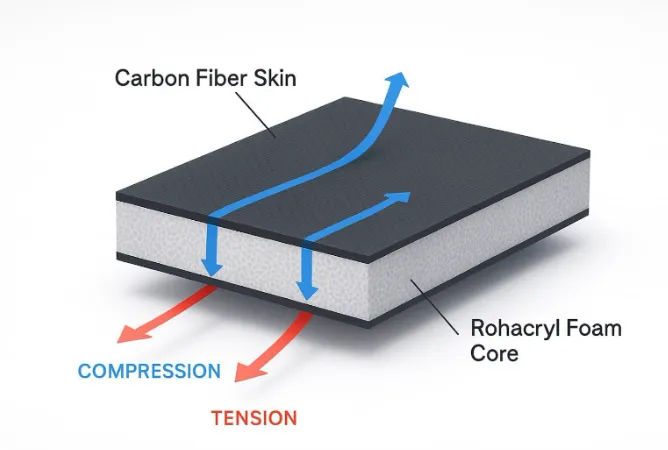
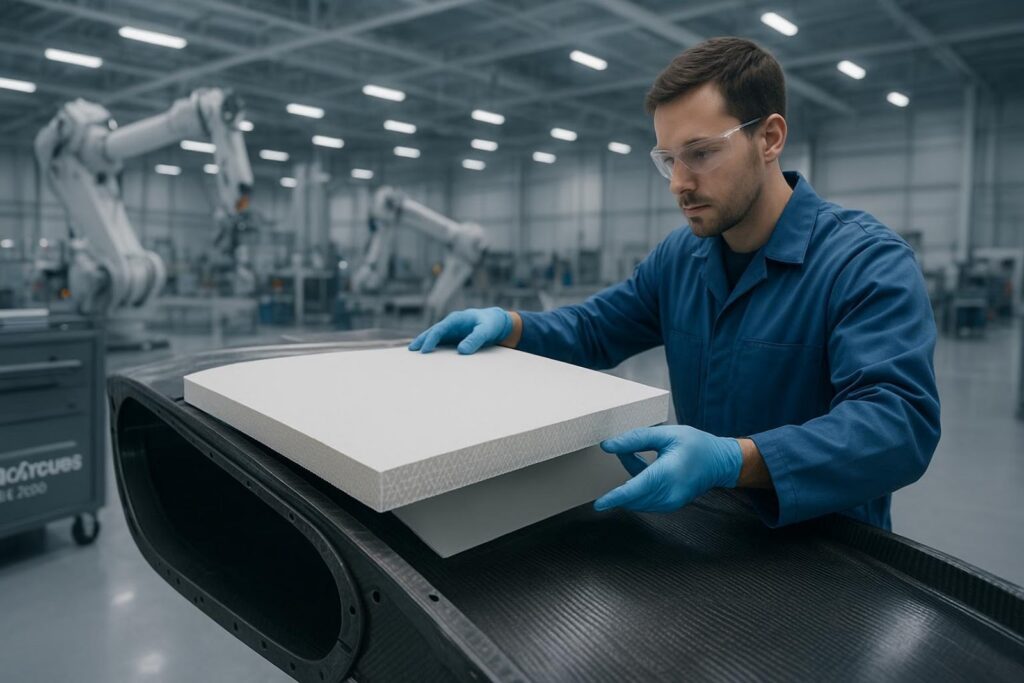
In durable polymer technology, Rohacryl works as the “skeleton” of a sandwich structure. Placed between two thin, strong skins-such as carbon fiber or fiberglass-it creates a composite part with a very high moment of inertia. This helps the final product resist bending and impact forces that would usually deform or break solid materials of the same weight.
How Does Rohacryl Differ From Other Polymer Solutions?
One key difference with Rohacryl is its special cell structure. It has very small, uniform, closed cells with isotropic behavior. This even structure means the mechanical properties are the same throughout the material, no matter the direction of the applied load. Compared with traditional PVC foams, Rohacryl offers better thermal stability and a stronger strength-to-weight ratio, which is important for high-performance uses.
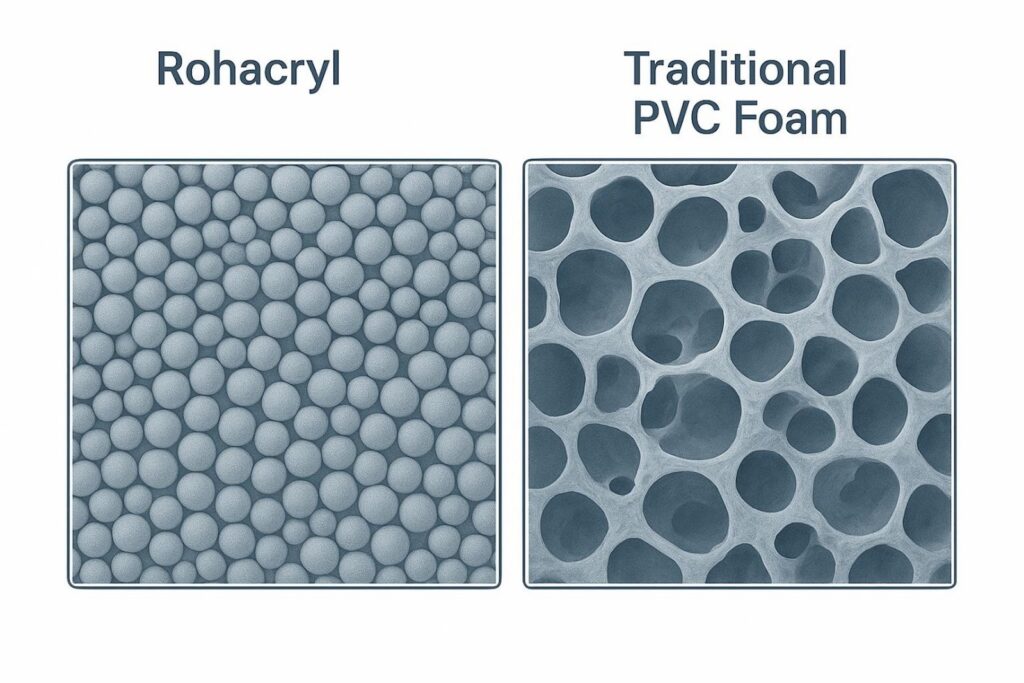
Rohacryl also stands out in how it interacts with resins. Many common foams soak up too much resin during infusion, adding extra weight and cost. Rohacryl is made for low resin uptake, taking only what is needed to form a strong bond. This efficient behavior comes from the new acrylic chemistry created by Evonik and sets it apart from more porous or less stable foams.
What Makes Rohacryl Suitable for Modern Industrial Design?
Modern industrial design focuses heavily on sustainability and efficiency. Rohacryl fits well here because it is a recyclable structural foam. As industries move toward a circular economy, the ability to recover and reuse materials at the end of a product’s life becomes a strong advantage. Rohacryl supports this through monomer recycling, helping close the loop on materials.
Its good fit with automated manufacturing methods also makes it popular for designers who need scalable production. Whether used in Resin Transfer Molding (RTM) or vacuum infusion, the material stays stable and easy to work with. This flexibility lets designers explore complex, 3D-curved parts that are lightweight yet very strong.
Core Properties and Performance Advantages of Rohacryl
Mechanical Strength and Weight Efficiency
Rohacryl’s main strength is its high mechanical performance at low density. With a shear modulus up to 47 MPa, it offers the stiffness needed to carry heavy loads in sandwich structures. This allows engineers to design thinner cores without losing structural benefits, which is important in weight-sensitive projects.
Weight efficiency also depends on how the foam behaves during production. Because Rohacryl has very low resin absorption-sometimes as low as 250 g/m²-the total weight of the finished composite part can be much lower than with more absorbent cores. This “double saving” on weight is a strong advantage in modern engineering.
Thermal and Chemical Resistance
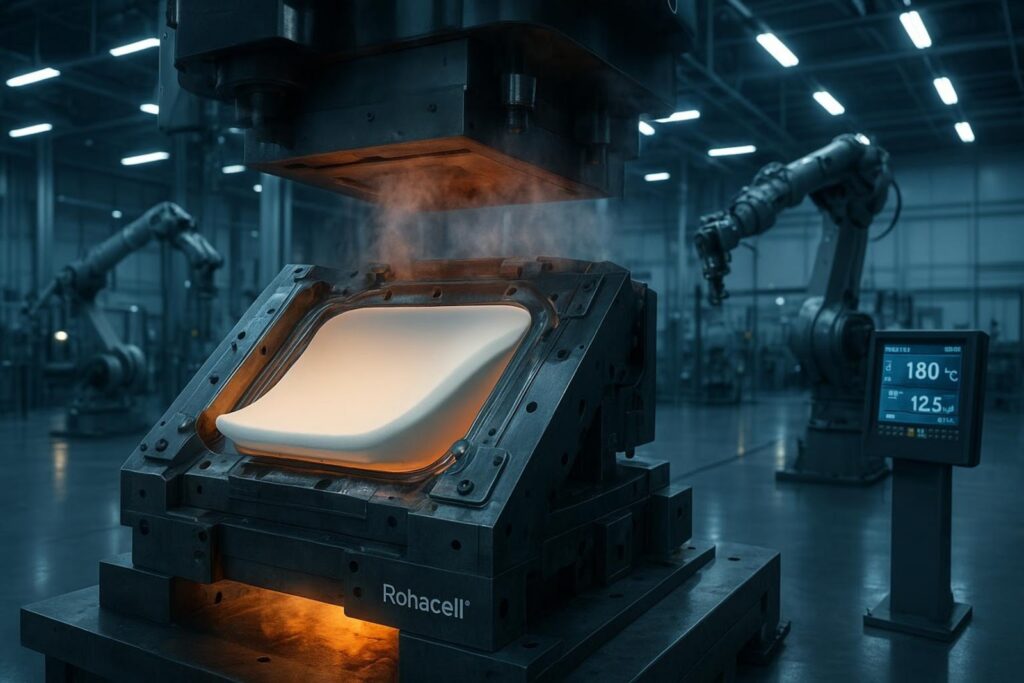
Many industrial processes require materials that can handle high processing temperatures. Rohacryl can be processed at temperatures up to 120°C. This thermal stability allows faster curing cycles in the mold, which speeds up production and cuts the energy needed for manufacturing. It does not warp or break down at the heat levels used in RTM and infusion.
Chemically, Rohacryl is built to be strong and stable. It works well with modern acrylate-based resins and does not contain harmful CFCs or halogenides. This resistance helps the foam keep its properties even when it faces various chemicals and weathering over a long working life, making it a solid choice for outdoor and industrial settings.
Durability Under High-Stress Industrial Conditions
Industrial parts often face changing loads and constant vibration. Rohacryl offers very good fatigue resistance, so it can handle many stress cycles without forming internal cracks or losing adhesion to the composite skins. This long-term durability is important for parts like wind turbine blades or fast marine craft expected to run for decades.
The material also shows strong compressive creep behavior. Under pressure in an autoclave or during infusion, the foam keeps its shape and thickness. This dimensional stability helps the final part meet tight engineering tolerances, which is important for safety-related uses in aerospace and automotive design.
Processing Flexibility in Manufacturing
Producers value Rohacryl for how easy it is to machine. It can be cut quickly and cleanly with standard CNC tools, which shortens preparation time on the shop floor. Its closed, isotropic cells prevent fraying or splintering during fast cutting, leading to smooth edges and less scrap.
Rohacryl is also highly thermoformable. When heated, it can be shaped into complex 2D and 3D curves to match detailed molds. This flexibility reduces the need for “deep-cut” or “grid-scored” foam sheets, which helps lower resin use and improves the overall strength and uniformity of the finished part.
Comparing Rohacryl to Traditional Structural Core Materials
Strength-to-Weight Ratio vs. Alternatives
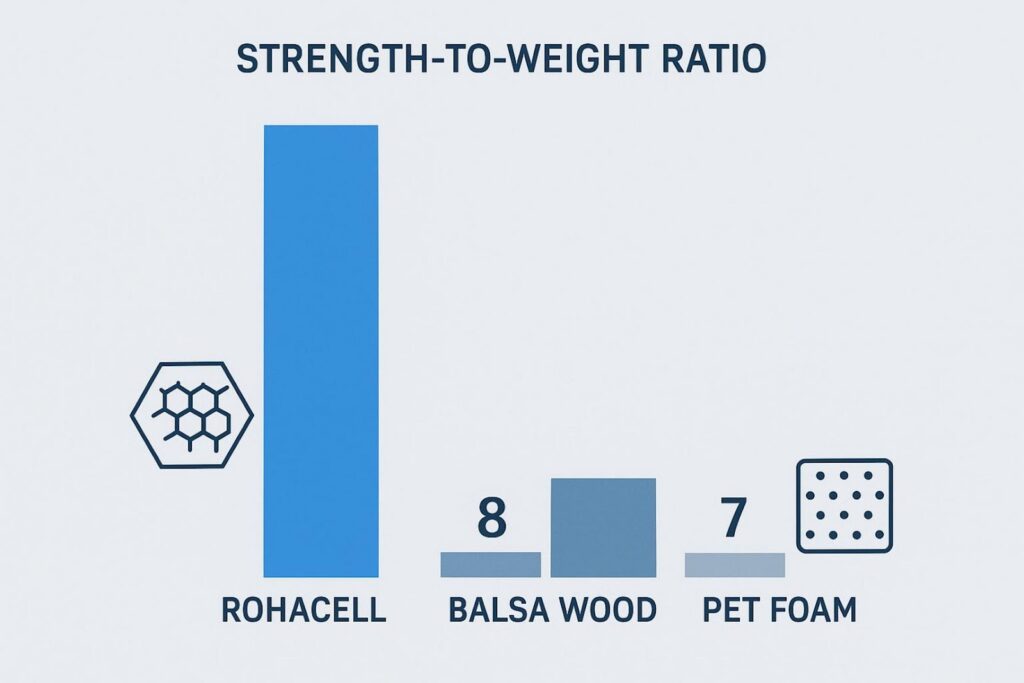
Compared with common core materials like balsa wood or PET foams, Rohacryl usually offers a better strength-to-weight ratio. Balsa is strong but, as a natural product, can vary a lot in density and properties. Rohacryl, as an engineered polymer, offers a very uniform and repeatable cell structure so that each part shows consistent performance.
PET foams are often used as a cheaper option but generally need higher densities to reach the same mechanical strength as Rohacryl. By choosing Rohacryl, engineers can often work with a lower-density foam to meet their structural targets, which leads to lighter parts and less stress on the full assembly.
Processing Time and Cost Efficiency
In industrial production, time directly affects cost, and Rohacryl helps reduce both. Its high thermal stability makes shorter cycle times possible in vacuum-assisted resin infusion (VARI) and similar processes. Faster production increases throughput and lowers labor cost per unit.
Cost savings also come from low resin uptake. Resin is often one of the most expensive materials in a composite part. By cutting the amount of resin that stays in the foam cells, Rohacryl lowers total raw material costs. These savings can be large in high-volume markets like automotive and wind energy.
Lifecycle Performance and Environmental Impact
Traditional PVC foams may include halogens or other substances that cause problems in disposal or in case of fire. Rohacryl is free from CFCs and halogenides, which makes it safer and better for the environment. Its long working life also means parts need replacement less often, lowering total industrial waste over time.
Over the full lifecycle, Rohacryl’s recyclability is a major benefit. While many composite materials are landfilled at the end of their life, the acrylic chemistry behind Rohacryl supports monomer recycling. This allows the material to be broken down and used again, helping move industry toward more sustainable energy and production models.
Key Application Areas for Rohacryl Solutions
Renewable Energy: Advancing Wind Turbine Rotors
The wind energy sector is one of the main users of Rohacryl. As rotor blades get longer-over 80 meters onshore and 115 meters offshore-the need for light, high-strength cores becomes more pressing. Rohacryl helps cut blade mass, which lowers loads on bearings, hubs, and towers and extends the life of the whole turbine system.
In these uses, Rohacryl’s strong environmental resistance is a big plus. It can handle tough offshore conditions, including moisture and temperature swings, so blades can run reliably for 20 years or more with limited maintenance.
Aerospace: Lightweight, High-Strength Components
In aerospace, even small weight savings improve fuel efficiency or payload. Rohacryl is used for lightweight aircraft structures such as interior parts, fairings, and non-primary structural components. Its high strength-to-weight ratio and halogen-free, fire-safe profile make it a good fit for strict aviation standards.
Automotive: Structural Parts for Efficiency and Safety
The automotive industry uses Rohacryl in foam-based composite structures for both passenger and commercial vehicles. By swapping heavier metal or solid plastic parts with Rohacryl-cored composites, manufacturers can increase fuel efficiency in conventional cars and extend driving range in electric vehicles (EVs).
Marine: Corrosion-Resistant and Lightweight Uses
Shipbuilders are using more composites to build faster and more efficient boats and ships. Rohacryl is used in decks, bulkheads, and hulls. Its very low resin absorption prevents the “weight gain” often seen with other foams, helping vessels stay light and fast. One example is Falcon Tenders, which used Rohacryl for a barge rooftop that ended up 75% lighter than specified while still supporting a heavy glass load.
Antennas and Electronics: Precision and Insulation
In electronics, Rohacryl is valued for its low impact on electromagnetic signals. It is widely used in radomes and antenna covers, where it adds structural strength without blocking or disturbing signal transmission. Its dielectric behavior and good machining properties make it a standard material in high-tech communication systems.
Medical: Biocompatible and Strong Solutions
The medical field needs high-quality composites for equipment such as X-ray tables and prosthetic devices. Rohacryl’s high strength and radiolucency (allowing clear X-ray imaging) make it an excellent core for medical imaging furniture, where both patient support and image clarity matter.
Sport and Leisure: Durable Lightweight Equipment
For products like high-performance bicycles, skis, hockey sticks, and surfboards, Rohacryl provides the needed mix of strength and flexibility. Athletes get equipment that is lighter and more responsive, while manufacturers work with a material from Chem-Craft that holds up under the high impacts and repeated loads of competitive sport.
Sustainability and Recyclability of Rohacryl
Role in Reducing Energy Consumption and Emissions
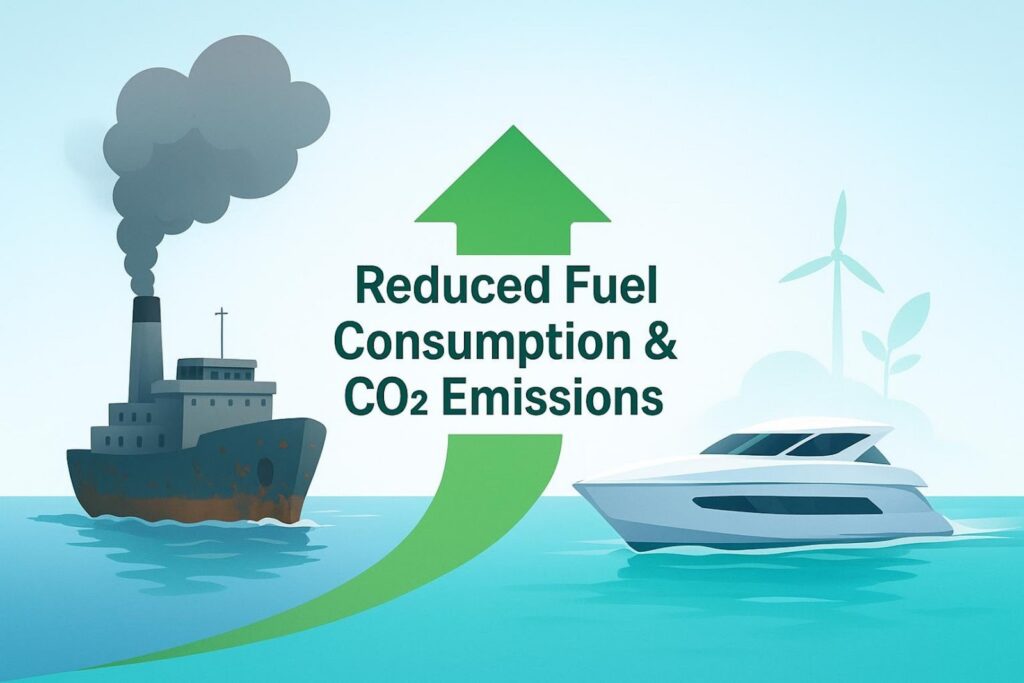
By supporting the design of lighter vehicles, ships, and aircraft, Rohacryl directly helps cut global CO₂ emissions. Lighter transport systems need less energy to move, leading to large fuel savings over the full life of each vehicle. In wind power, lighter blades can start turning at lower wind speeds, raising total green energy output.
Recyclability and Circular Economy Potential
Rohacryl is developed with “end-of-life” use in mind. Its recyclable polymer system allows it to be processed back into its base monomers. This approach reduces the need for new raw materials and lowers the energy use tied to extracting them. It is a future-ready material that fits well with the global move toward a circular economy.
Meeting Industry Sustainability Standards
The development of Rohacryl aligns with several United Nations Sustainable Development Goals (SDGs), including SDG 7 (Affordable and Clean Energy), SDG 12 (Responsible Consumption and Production), and SDG 13 (Climate Action). By offering a low-impact, high-performance material, Evonik supports customers in meeting their own sustainability goals and regulatory demands.
Process Benefits for Manufacturers Using Rohacryl
Adaptability to Existing Production Lines
Rohacryl offers a major benefit in that it does not force factories to rebuild their production lines. It fits well into current kitting and lay-up methods. Whether a plant uses hand lay-up, infusion, or RTM, Rohacryl can be added as a better core material with only small changes to the process.
Lowering Minimum Order Quantities and Lead Times
Access to high-performance materials can be difficult for smaller producers. Working with a dedicated distributor such as CHEM-CRAFT-the main supplier of Rohacryl in Nordic Europe, Eastern Europe, and the BeNeLux region-gives companies short lead times and low minimum order levels. This level of access supports innovation, testing, and pilot projects.
Technical Support and Customization
High-quality composite design often depends on specialist guidance. Distributors like CHEM-CRAFT offer technical support and consulting to help manufacturers pick the right Rohacryl grade for each job. This joint work helps customers use the material to its full potential, improving both part design and production flow.
Selecting the Right Rohacryl Solution for Your Industrial Design Needs
Evaluating Application Requirements
When choosing a Rohacryl solution, you should look closely at the loads and conditions the part will face. Key points include maximum operating temperature, required shear modulus, and the preferred production method (such as RTM or infusion). For example, high-volume automotive parts may focus on fast processing, while aerospace parts may focus on the lowest possible weight.
Benefits of Partnering with an Official Rohacryl Distributor
Working with an official Evonik distributor like CHEM-CRAFT gives access to genuine, high-quality material backed by current technical data. Their composite engineering team can offer custom solutions that match your technical requirements and supply chain setup, helping you keep consistent quality across all production. This kind of partnership is a strong asset for any company aiming to lead in modern industrial design.
As of 2026, the move toward sustainable and efficient materials has become a basic need in industry. Rohacryl is a leading option in this shift, offering a rare mix of strong mechanical performance, efficient processing, and environmental responsibility. By choosing advanced polymer technologies, manufacturers are building better products and supporting a more sustainable, energy-efficient future for global industry.