Government cyberattacks aren’t recurrent across different governments around the world. And it’s very difficult to build a defense against.
In March 2025, the NSW Online Registry breach exposed around 9,000 sensitive court files, showing how one incident can disrupt public operations and damage trust.
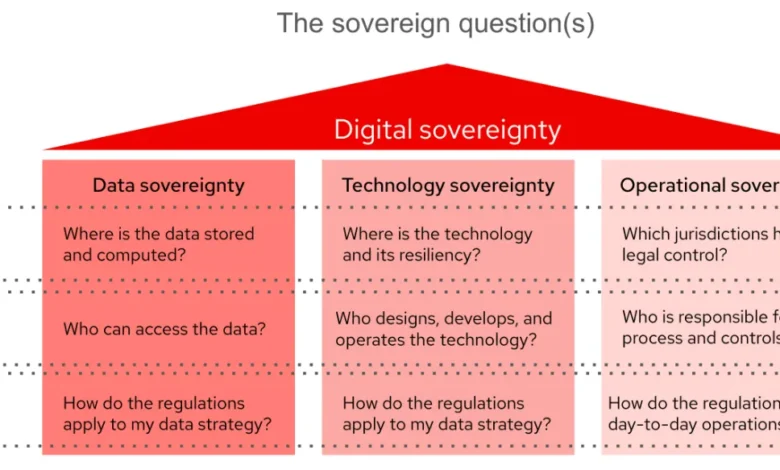
That’s why digital sovereignty is of the utmost necessity. It’s an initiative to keep data storage, processing, and access under national control to align with frameworks like GDPR.
Digital sovereignty means keeping data storage, processing, and access under national control to align with frameworks like GDPR (General Data Protection Regulation ) in Europe, and CCPA (California Consumer Privacy Act) in the US.
That’s why localized hypervisors matter. They help governments keep data within borders, reduce dependence on foreign platforms, and strengthen security.
Sangfor aSV stands out here as a practical, integrated foundation for sovereign infrastructure.
The Stakes Have Never Been Higher
Geopolitical tensions are reshaping how governments think about data. The US–China tech decoupling, Europe’s push to break away from American cloud dominance, India’s growing insistence on local data handling- these aren’t just policy debates. They’re driving real procurement decisions.
Meanwhile, the threat landscape is brutal. According to the Verizon DBIR 2024, the public sector accounted for one of the highest shares of data breaches across all industries. A significant portion of the breaches involved a non-malicious human element, misconfigurations, stolen credentials, and accidental exposure. All of these risks compound dramatically when your infrastructure lives in a foreign vendor’s data center.
Non-localized cloud setups bring specific risks that governments often underestimate. Vendor lock-in is real; once you’ve moved workloads to a hyperscaler, migrating out is expensive and painful.
Data exfiltration, even unintentional, can happen when data crosses jurisdictional lines without robust controls. And compliance violations? Regulators are increasingly unsympathetic to “we didn’t know where our data was going.”
This is where on-premise virtualization steps in as not just a security measure, but a sovereignty strategy.
Sangfor aSV: A Hypervisor Built for Sovereign Infrastructure
Unlike many virtualization platforms originally designed for enterprise efficiency, Sangfor aSV is engineered with control, security, and independence as core priorities.
It operates as a server virtualization platform that runs entirely on-premises, eliminating the need for external cloud communication. This ensures that sensitive government workloads remain within controlled environments at all times.
While broader platforms like VMware vSAN or Nutanix AOS offer powerful capabilities, they are often part of ecosystems that encourage hybrid or cloud-connected architectures. In contrast, Sangfor aSV emphasizes localized deployment and operational autonomy.
Key Capabilities
- Built-in security architecture: Designed with zero-trust principles, rather than relying on add-ons
- Fully on-premises operation: No external cloud dependencies for core functionality
- Efficient scalability: Expand infrastructure without service disruption
- Unified management: Centralized control without fragmented licensing models
These capabilities make it particularly suited for government environments handling sensitive workloads such as taxation systems, election infrastructure, and citizen services.
| Pro Tip: Sangfor’s bare metal hypervisor foundation means the virtualization layer runs directly on hardware. It needs no host OS between the hypervisor and your workloads. For sensitive government applications, that isolation is non-negotiable. |
What Is Server Virtualization Software and Why Does It Matter for Sovereignty?
If you’re newer to this space, here’s the quick version. Server virtualization software abstracts your physical hardware, including CPUs, memory, and storage, and lets you run multiple virtual machines on a single physical server. The efficiency gains are well-documented.
But here’s the sovereignty angle that often gets missed: where that virtualization layer runs, and who controls it, determines whether your data stays within your borders.
If your server virtualization software requires cloud connectivity to activate and maintain, you’ve already introduced a cross-jurisdictional dependency, regardless of where your physical hardware sits.
Sangfor’s approach is to make the entire virtualization stack self-contained. Their server virtualization software comes with built-in compliance tooling, local management, and no external phone-home requirements.
For a government ministry or defense agency, that’s the difference between actually meeting your data-localization obligations and just hoping you do.
How Does a Bare Metal Hypervisor Enhance Government Data Security?
There are two types of hypervisors. Type 2 runs on top of an existing operating system, think VirtualBox on your laptop. Useful, but for production government workloads? Not a conversation worth having.
A bare metal hypervisor (Type 1) runs directly on the hardware. There’s no host OS underneath it that can be exploited, misconfigured, or patched at an inconvenient time. This architecture shrinks your attack surface considerably.
Sangfor aSV is built on a Type 1 architecture, which delivers several advantages for government use cases:
- Native workload isolation: sensitive departments can run on isolated VMs with no shared memory or storage surfaces between them.
- Reduced patch complexity: fewer layers means fewer things to update, audit, and verify.
- Full hardware control: TPM integration, secure boot, and hardware-level encryption are easier to implement cleanly.
For sensitive workloads, this architecture provides a more controlled and resilient foundation.
Implementation Roadmap: Deploying Sangfor aSV for Sovereignty
Sangfor aSV helps build data sovereignty. Here’s a guided roadmap helping deploy Sangfor aSV:
Audit Existing Infrastructure
Begin by mapping workloads, data flows, and vendor dependencies. This helps identify hidden external linkages that may compromise sovereignty.
Prioritize Critical Workloads
Migrate high-sensitivity systems first, such as healthcare records, financial systems, and citizen data, to a localized virtualization environment powered by Sangfor aSV.
Integrate Security Controls
Implement encryption, access control policies, and network segmentation from the outset. Built-in features within Sangfor aSV reduce the need for additional tools.
Monitor and Optimize
Use centralized dashboards to track performance and security metrics in real time. Continuous monitoring ensures proactive risk management.
| Pro Tip: Sangfor offers free infrastructure assessments for government and public sector organizations. They’ll map your current state against sovereignty requirements and give you a gap analysis at no cost. |
Securing Tomorrow: Embrace Localized Hypervisors with Sangfor Today
Localized hypervisors aren’t just a technical decision; they’re a governance one. With Sangfor HCI, you get a platform that combines enterprise-grade server virtualization software and a proven bare metal hypervisor foundation, purpose-built for the compliance and security demands of the public sector.
In an era where data is a national asset, the question isn’t whether you need digital sovereignty. It’s whether you have the infrastructure to enforce it. Sangfor leads the way.
Ready to take the next step? Contact Sangfor today for a demo or free assessment of your sovereign infrastructure requirements.