A construction industry marketing agency is a specialist partner that helps builders, contractors, and remodelers boost their online presence, attract better leads, and build a strong brand in a crowded market. Using experience from the building sector, these agencies connect what happens on the job site with what happens online, so your company doesn’t just put up structures, but also keeps a steady flow of new work coming in, notes B&R Property Management.
Today, with 96% of people researching local businesses online before they choose one, working with a construction industry marketing agency has become a basic requirement for staying in business and growing.
These agencies go far beyond basic lead generation. They understand the specific “language” of construction, from architectural terms to the seasonal patterns that affect project schedules. They use a mix of digital marketing, branding, and strategic communication to position your company as a trusted expert.
Whether you are a general contractor going after commercial projects or a residential remodeler focused on kitchen makeovers, a specialist agency builds a clear plan that turns your past results into a steady source of new contracts.
What Does a Construction Industry Marketing Agency Do?
Key Services for Construction Businesses
A construction marketing agency offers a wide range of marketing services built specifically for building and trade companies. This includes digital marketing, branding, public relations, and content creation. Unlike general agencies, they focus on tactics that fit industry decision-makers, such as geofencing ads around job sites and creating technical case studies. Their aim is to help construction firms succeed in a digital-first market by working with modern search engines and social platforms in the right way.
These agencies also handle pay-per-click (PPC) management, social media management, and advanced search engine optimization (SEO). They often act like a “personal stylist” for your brand, making sure everything from your logo to your project photos looks consistent and professional. By taking care of these technical and creative tasks, they free owners and managers to focus on running jobs and managing crews while the agency takes care of everything online.
How Specialized Construction Marketing Differs from General Marketing
Construction is not a simple, uniform industry, and general marketing often ignores the real challenges it faces. A specialist agency knows that construction sales cycles are long and irregular, with many people involved in each decision. They understand seasonality-the busy months and slow periods-and adjust budgets and messages so inquiries keep coming in throughout the year.
Specialist marketing also takes into account high liability and tough local competition. While a general agency may focus only on quick sales, a construction-focused firm pays close attention to long-term reputation and relationships. They can speak to architects, engineers, and project managers in accurate technical terms while still making the message clear for homeowners and developers. This helps you present yourself as both skilled and reliable, whether your audience is price-sensitive homeowners or large commercial clients.
Why Construction Companies Need Marketing Expertise
Common Marketing Challenges in Construction
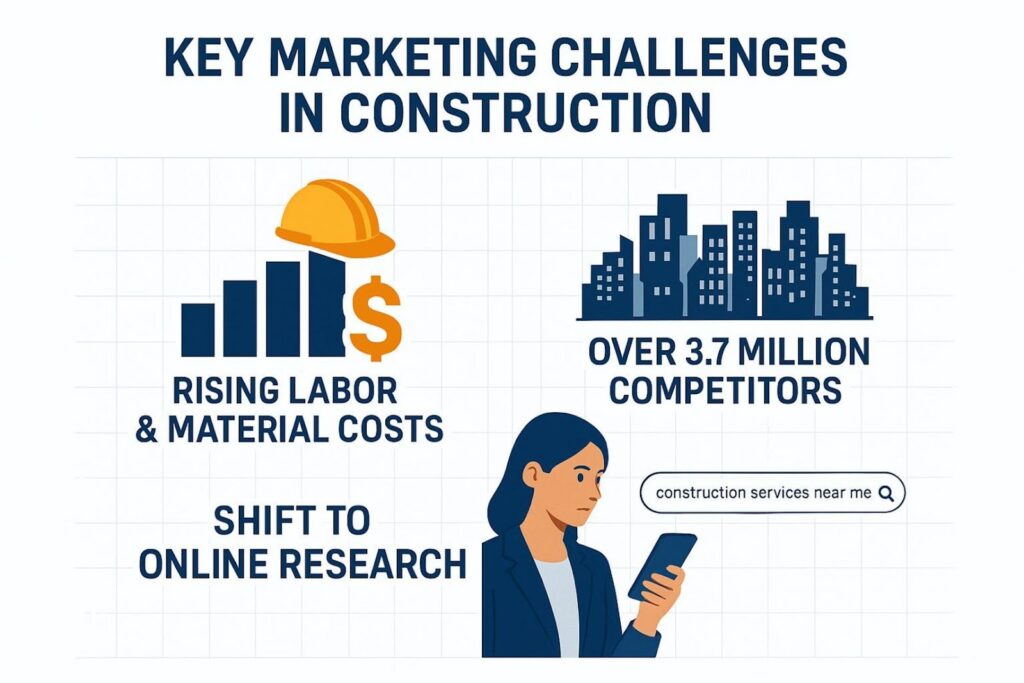
The construction industry is under pressure, with 63% of contractors worried about labor costs and 73% about rising material prices. This means every marketing dollar has to work as hard as possible. On top of that, the market is extremely crowded: more than 3.7 million building businesses operate in the U.S. alone, making it harder for any single firm to stand out without a clear plan.
Many contractors still lean heavily on word-of-mouth. While referrals are valuable, they rarely support steady growth in 2026. More and more people now use search engines and social media to research providers. Without a strong online presence, your firm may be invisible to most potential clients who start their search on Google or social platforms.
Risks of Relying on Generic Marketing Approaches
Using a generic marketing approach often leads to “one-size-fits-all” tactics that do not match a construction firm’s real priorities. General agencies may aim for broad, high-traffic keywords that attract visitors but not serious buyers. This can waste time and money and lead to a weak return on investment (ROI). In a field where project owners are closely examining each development, vague, non-specialized messaging can make your company seem inexperienced or disconnected from industry needs.
Generic plans also tend to ignore local SEO and reputation management, which are central to most contracting businesses. If you don’t focus on local search and reviews, you can easily fall behind competitors who do. Without a plan built specifically around the construction market, companies often end up chasing trends and reacting late instead of setting their own path and taking the lead.
Benefits of Partnering With a Construction Marketing Agency
Increased Online Visibility for Builders and Contractors
One major benefit of working with a specialist is a strong jump in search rankings. With local SEO, agencies help your business appear at the top of Google Maps and standard search results when people in your area look for your services. This visibility matters because the global construction market is projected to hit $15.7 trillion by 2025, and companies that cannot be found online will miss out on much of this growth.
Better visibility also helps you reach beyond your existing network. Digital platforms allow you to target certain types of customers, such as homeowners in specific ZIP codes or developers focused on sustainable building. This kind of targeting helps your brand show up in front of the right people at the right time, acting like a bright signal cutting through a crowded field of competitors.
Stronger Branding and Reputation Management
Your brand is the overall impression people have of your company, not just your logo. A specialist agency keeps your branding clear and consistent across your website, social media, and printed materials, and makes sure it matches your values and market position. They also manage your online reputation by asking happy clients to leave reviews on Google, Facebook, and other platforms. This effort matters: a strong rating, such as a 4.8-star average, can be the deciding factor when a client chooses between two similar firms.
Reputation work also means highlighting your focus on safety and professionalism. In a high-liability industry, marketing can help show off your safety record, insurance, and certifications. This builds trust that generic messaging usually cannot match, turning your reputation into something real and valuable that helps you win more bids.
Generating Qualified Leads and New Business
The main aim of marketing is growth, and construction marketing agencies specialize in bringing in leads that are more likely to turn into paid jobs. Using data-driven methods, some agencies have tripled organic traffic for their clients. This extra traffic is directed through websites with clear layouts and strong calls-to-action, so more visitors turn into serious inquiries.
Agencies also target “high-intent” keywords-search phrases used by people ready to start a project soon. This focus means your sales team spends less time on casual browsers and more time with buyers who have both the budget and intent to move forward. Covering every stage of the sales funnel like this supports steady revenue growth over the long term.
Showcasing Projects and Building Trust
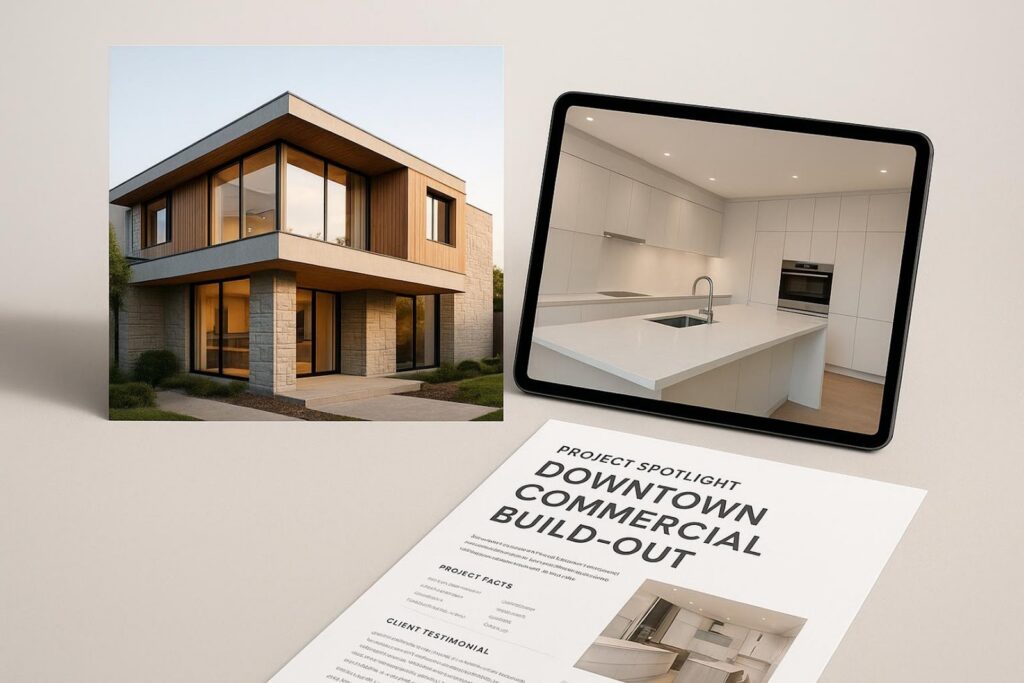
Your completed projects are your best marketing tools. A marketing agency helps you show them off with professional photos, video walk-throughs, and detailed case studies. By posting before-and-after images and real project stories, you give potential clients clear proof of what you can deliver. This openness builds confidence for people thinking about hiring you for major investments.
Putting a human face on your company is equally important. Agencies often recommend adding photos of the owner, project managers, and crews, because people like to work with businesses that feel personal and approachable. When you combine this human element with a strong portfolio, many potential clients feel a sense of connection and trust even before they pick up the phone.
Access to Industry-Specific Market Insights
Working with an agency gives you access to important information about market trends and customer habits. These firms study contract award data and customer behavior to fine-tune marketing plans. For example, they may spot rising interest in energy-efficient roofing or growing demand for accessory dwelling units (ADUs) in your region, and then recommend adjusting your services or messaging to match.
Companies that act on this kind of insight tend to outperform those that rely only on gut instinct. When you know what your target audience is searching for and what your competitors are offering, you can sharpen your unique selling points (USPs) and hold a strong position against rivals. This edge often allows smaller firms to compete effectively with much larger players.
Core Marketing Strategies for Construction Companies
Website Design and Optimization for the Construction Industry
A clean, easy-to-use website is the base of modern construction marketing. It is your online storefront, and a weak first impression can cause potential clients to leave quickly. Agencies focus on responsive design so your site works well on desktops, tablets, and smartphones. They also add clear calls-to-action (CTAs) such as “Request a Quote” or “Book a Free Inspection” to guide visitors through the next step.
Good optimization also means fast load times and simple, logical menus. A well-structured site makes it easy for visitors to find your services, specialties, contact details, and company story. A Content Management System (CMS) like WordPress lets you update project galleries and add new content quickly, keeping your portfolio current and impressive.
Search Engine Optimization (SEO) for Construction Businesses
SEO is the building block of your online presence. While 85% of marketers see SEO as more effective than PPC, ranking well for construction terms takes specialized work. Agencies tune your site with relevant industry keywords and strong content so you appear when people search for phrases like “general contractor near me” or “custom home builders in [City].” This ongoing organic traffic becomes a steady, low-cost source of leads.
Good SEO also relies on technical work behind the scenes, such as adding keyword-rich alt text to images and creating a clear site structure. When you regularly publish helpful content that answers common questions, search engines view your site as more trustworthy. Over time, this pushes your rankings higher, making you a clear option for both local homeowners and developers.
Content Marketing: Demonstrating Expertise
Content marketing focuses on sharing helpful information to build trust. Agencies help construction firms create blog posts, white papers, and educational videos that show their knowledge. This might include guides to renovation budgeting, videos explaining the stages of a kitchen remodel, or FAQs about permits and timelines. Such content reaches potential clients early in their research and often converts leads much better than old-style outbound marketing.
Strong content also supports SEO by naturally including the right keywords. By offering project breakdowns, infographics, or simple “how-to” guides, you give people the information they need and introduce them to your brand at the same time. Staying visible and useful in this way makes it more likely that prospects will remember your company when they are ready to hire.
Local SEO and Directory Listings
Most contractors work within a set local area, so local SEO is a key part of success. This means optimizing your Google Business Profile with correct information, good photos, and consistent name, address, and phone (NAP) details. A strong profile can put you at the top of Google Maps results and connect you quickly with local customers ready to act.
Local citations-listings of your business in trusted online directories-also help. These entries confirm your business details across the web. When search engines see the same information repeated accurately on many sites, your local search strength grows, and more nearby customers will find you when they search.
Pay-Per-Click (PPC) Campaigns
SEO takes time to build, but PPC ads can bring in leads right away. By bidding on high-intent keywords like “roofing contractor” or “home builder,” agencies can put your listing at the top of search results almost instantly. You pay only when someone clicks, and those clicks usually come from users actively looking for your services.
Agencies oversee and fine-tune these campaigns so you don’t waste budget on weak or unrelated clicks. Ads can be narrowed down by service type and location, so you focus on neighborhoods and job types that fit your goals. PPC is a strong way to fill your pipeline quickly while your long-term SEO work grows in the background.
Social Media Management
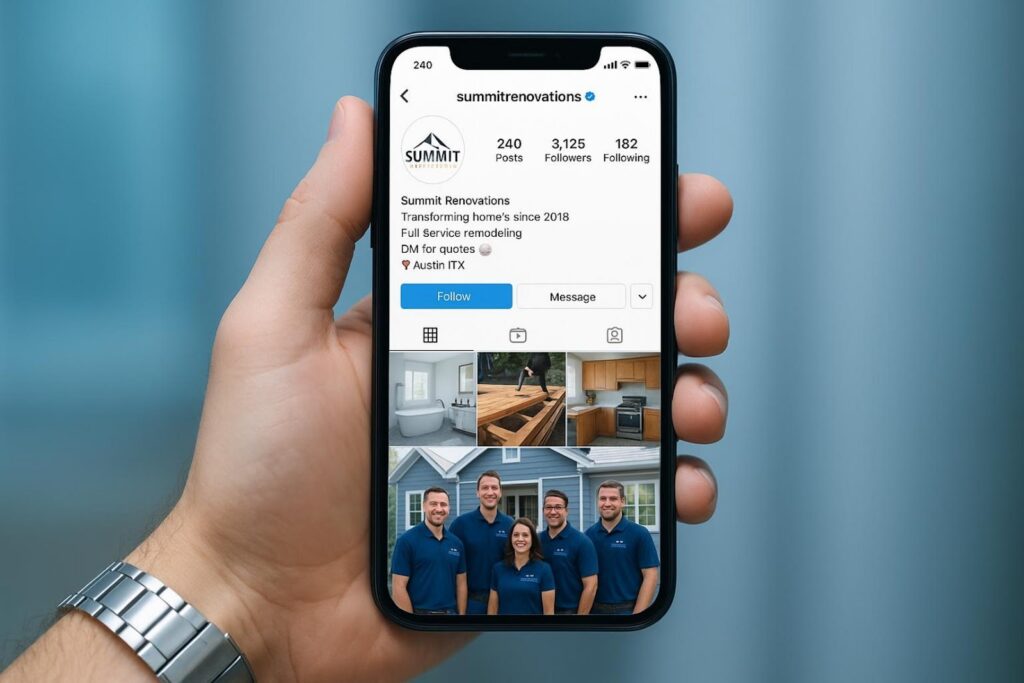
Social media channels like Instagram, Facebook, and LinkedIn act like ongoing networking venues for construction companies. Instagram works especially well for remodelers and builders because you can showcase high-quality photos and behind-the-scenes updates. Regular posts about progress, finished jobs, and team activity help present your business as friendly, responsive, and customer-focused.
LinkedIn is useful for building relationships with architects, engineers, and other industry partners, even though many contractors overlook it. Facebook groups can also provide leads and referrals from local communities. A specialized agency knows what type of content works best on each network-quick reels and project photos on Instagram, expert commentary and case studies on LinkedIn-so your social channels support your brand instead of just taking up time.
Email Marketing and Lead Nurturing
Email marketing is a low-cost way to stay in touch with prospects and past clients. Agencies set up automated email sequences that educate, answer questions, and share project updates as leads move closer to making a decision. These steady touchpoints can turn an early inquiry into a signed contract over time.
For existing clients, newsletters and personal emails with special offers, updates, or maintenance tips encourage repeat work and referrals. With the right approach, construction firms can keep up to 80% of their customers over the long term. Regular, useful communication reminds people of your quality and service long after a project ends.
Professional Project Photography and Case Studies
In construction, clear visuals carry huge weight. Hiring a professional photographer to capture completed work is a smart investment for both your website and social channels. Sharp, well-lit photos get attention and show that you deliver accurate, clean, high-standard work. Many agencies recommend scheduling a photographer every few months so your portfolio stays current and ready for use across all your marketing.
Case studies build on this by walking through the problem, your approach, and the final result on specific jobs. They show that you can handle difficult projects and keep your promises. When you combine strong visuals with these real-world stories, you present powerful proof that often makes the difference when a client is comparing you with another contractor.
How to Select the Right Construction Marketing Agency
Industry Experience and Proven Results
When choosing a partner, industry experience should be one of your first checks. An agency already familiar with construction terms, bid processes, and project types can start helping you faster. Ask about their past and current clients in contracting, specialty trades, or home improvement to see how deep their knowledge goes.
Reliable agencies, such as BuiltFor Studio, should be ready to share case studies and clear performance data. Look for signs of real improvement: more website visits, more qualified leads, and higher conversion rates for clients similar to you. If an agency can show that they improved ROI for another roofing, HVAC, or remodeling company, that is a strong sign they can help your business as well.
Range of Marketing Services Offered
Marketing works best when different channels support each other. Because of this, many businesses choose a “full-service” agency that can handle web design, SEO, PPC, social media, and even print or trade show materials. A combined approach keeps your branding consistent and makes sure all your efforts tell the same story.
Confirm that the agency is strong in the areas that matter most to you. If you need better website performance, check their technical SEO and web development skills. If your focus is winning more commercial work, look for help with proposal design, capability statements, and polished sales decks. The right agency should offer a set of services that closely matches your goals.
Transparency and Communication Practices
Clear reporting and honesty form the base of any good agency relationship. A quality partner will send regular updates and detailed reports on how your marketing is performing. You should be able to see where your traffic comes from, how many leads turn into real opportunities or contracts, and what your ROI looks like over time.
Communication style is also important. You want an agency that responds quickly, meets deadlines, and explains things in plain language. Talking to references or reading detailed reviews can give you insight into how they work. The best-fit agency will feel like part of your own team, focused on your results and growth.
Customized Strategies vs. One-Size-Fits-All
Every construction company has its own mix of services, locations, and ideal clients. That is why generic marketing packages rarely deliver strong results. A good agency will take time to learn about your goals, specialty areas, and local market, and then create a plan that fits your situation.
If an agency tries to sell you the same bundle they sell everyone else without taking a close look at your business, be cautious. A strong partner will review your current marketing, talk through your challenges, and build a clear 6-12 month roadmap that lines up with your priorities. This kind of focused plan helps you spend money only on the channels and tactics most likely to grow your revenue.
Building and Measuring Marketing Success in Construction
Tracking Lead Generation and Conversion Rates
Watching the “pulse” of your marketing is key to making sure it pays off. Agencies use tracking tools to see how many leads come in and how many of them become signed contracts. By comparing what you spend on each campaign with the profit from the jobs it brings in, you can find your true marketing ROI.
This tracking also shows which channels work best. For example, your data may show that social media generates many inquiries, but SEO leads close at a much higher rate. With this information, you can shift more of your budget to the activities that bring in the most profitable projects.
Analyzing Website and Campaign Performance
Web analytics reveal how people move through your site. Agencies review numbers like bounce rate, time spent on each page, and the steps users take before submitting a form or calling. This kind of review acts like a “check-up” for your website, finding pages or steps where people may be dropping off.
Campaign performance analysis works in a similar way. By running A/B tests-showing two versions of an ad or landing page-agencies learn which headlines, images, and offers your audience prefers. Over time, these ongoing tests and adjustments help your marketing become both more effective and more cost-efficient.
Adjusting Strategies Based on Data
The construction market changes regularly, so marketing plans need room to change as well. Data-focused agencies use performance reports to update and improve campaigns. If certain keywords stop producing quality leads or a new social platform becomes popular with your audience, the agency can shift your strategy so you stay ahead.
This flexible approach helps construction firms stay visible and competitive even as buyer habits, regulations, and economic conditions change. By choosing a partnership that relies on data instead of guesswork, you keep your company ready to respond quickly and keep growing year after year.
Frequently Asked Questions About Construction Industry Marketing Agencies
What services do construction marketing agencies offer?
These agencies provide a wide range of services, including SEO, PPC advertising, social media management, and professional website design. They also create industry-specific content like project case studies, drone footage, and “how-to” articles. Many offer branding, public relations, and local review management to help construction firms build trust and authority in their target markets.
Why is industry specialization important for construction marketing?
Construction faces unique issues, including long sales cycles, seasonal demand swings, and detailed technical language. A specialized agency knows these factors and can speak clearly to architects, engineers, developers, and homeowners. They know which tactics work well for contractors-such as strong local SEO, photo-rich project galleries, and detailed service pages-and which ones waste time and budget.
How do marketing agencies measure campaign success?
Agencies track success using metrics like website traffic, number of qualified leads, and conversion rates. They also watch keyword rankings and social media engagement. With web analytics and CRM tools, they can connect leads to specific campaigns and show how much revenue each campaign helped generate compared with its cost.
Can a marketing agency help with website development for construction companies?
Yes. Many construction marketing agencies build modern, mobile-friendly websites specifically for trades and building companies. They focus on creating clear “digital storefronts” that feature project galleries, client reviews, and direct calls-to-action. They also set up the site with SEO basics in place so future marketing efforts have a strong base to build on.
How do I start working with an agency for my construction business?
Most relationships start with a consultation where you talk through your goals, current marketing, and budget. You should research agencies with proven construction experience and ask for case studies or references. Once you choose a partner, the agency will usually review your existing online presence and then build a custom strategy that fits your needs and target audience.
Many forward-thinking agencies are also adding advanced tools like virtual reality (VR) and artificial intelligence (AI) to their services. VR tours of planned projects can give clients an experience similar to walking through a finished building before work begins, which can help close large deals. AI-powered chatbots on your website can answer common questions right away, so potential leads get help even outside normal office hours.
Business management software like Kickserv or Buildxact can also support marketing work. These platforms store customer preferences and project history in one place, which you can then use to personalize follow-up emails, offers, and content. By combining organized field operations with strong digital marketing, construction firms can give clients a smooth experience from the first online search to the final project walkthrough.