The name Rodney Hinton Jr. has become widely discussed across national news in 2025 due to a deeply tragic and complex sequence of events that unfolded in Cincinnati, Ohio. His story is not just about a criminal case — it’s about family, grief, mental health, controversy, and the clash between personal suffering and societal justice. This article explores Rodney Hinton Jr.’s life and the events that brought him into the spotlight, breaking down each aspect with clarity and insight.
1. The Man Behind the Name: Who Is Rodney Hinton Jr.?
Rodney Hinton Jr. is a 38‑year‑old man from Cincinnati, Ohio, who came into national focus following a pair of tragic incidents that occurred in early May 2025. Prior to these events, Hinton Jr.’s life was relatively private, and what little public information exists about him centers largely around his interactions with law enforcement and some past legal troubles. Court records indicate he has faced charges in the past for incidents like aggravated menacing and assault, as well as minor traffic violations, reflecting a history that includes moments of conflict and legal involvement.
Despite these incidents, his name was not widely known — until an unimaginable personal loss changed everything. The events that followed highlighted not only Hinton Jr.’s personal suffering but also raised broader questions about grief, accountability, and the legal system.
2. The Tragedy Begins: The Death of Ryan Hinton
The catalyst for everything that happened next was the death of Rodney Hinton Jr.’s 18‑year‑old son, Ryan Hinton. On May 1, 2025, Cincinnati police officers encountered Ryan in connection with a vehicle that was reported stolen. During the interaction, officers pursued him on foot after he fled, and ultimately, he was shot and killed by police. Authorities reported that Ryan was armed and that he pointed a firearm at officers before being shot.
Ryan’s death was immediately controversial. Family members and some community observers questioned the necessity of lethal force, and body‑worn camera footage was reviewed by Ryan’s family, including his father, shortly before what would happen next. Whether one views this encounter as justified or excessive, the outcome was the same: a father lost his son in a violent and sudden manner, and that loss would have profound consequences.
The emotional weight of a parent witnessing the violent killing of their child cannot be overstated. Most would never have to confront such a tragic situation. Yet for Hinton Jr., this devastating event set the stage for actions that shocked a city and sparked national debate.
3. The Fatal Incident: Deputy Henderson’s Death
Just one day after viewing the body camera footage of his son’s death, tragedy struck again — this time involving another life. On May 2, 2025, Rodney Hinton Jr. allegedly drove his car directly at Hamilton County Sheriff’s Deputy Larry Henderson while the deputy was performing traffic control duties near the University of Cincinnati during a graduation event.
The collision resulted in Deputy Henderson’s death. Authorities assert that Hinton Jr. made a conscious decision to drive at the deputy, striking and killing him. Immediately following the incident, Hinton was arrested and charged with aggravated murder, a charge that in Ohio carries the possibility of the death penalty.
The circumstances made this case particularly chilling. Deputy Henderson was not involved in the investigation of Ryan’s death, nor was he connected to the prior interaction. He was simply performing his duties. Yet in the chaos of a grieving father’s mind, he became the unintended victim of a horrifying act.
The contrast between the two deaths — Ryan’s controversial shooting by police and the accidental targeting of Deputy Henderson — illustrates the profound complexity of the situation. Both were human lives lost within an emotional whirlwind of pain and reaction.
4. Legal Proceedings: Pleas, Defense, and Civil Rights Claims
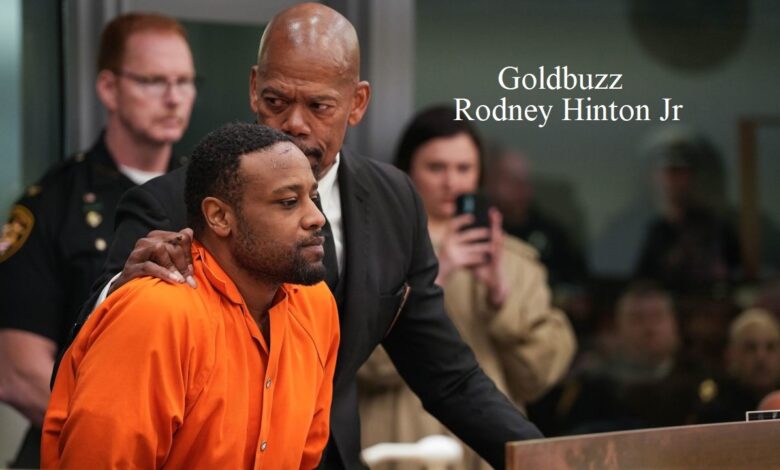
Once taken into custody, Hinton Jr. entered a not guilty plea to the aggravated murder and related charges, setting the stage for a long and contentious legal process.
Not Guilty and Mental Health Defense
Hinton Jr. chose to contest the charges, maintaining that he is not guilty. However, his defense has pivoted toward a strategy centered on mental health and diminished capacity. Attorneys for Hinton Jr. have asserted that at the time of the incident, he was experiencing a severe mental health crisis triggered by the death of his son. According to multiple reports, forensic psychologists have diagnosed him with serious mental illnesses, such as bipolar disorder and psychosis, which they argue substantially impaired his ability to make rational decisions during the incident.
This defense has critical legal implications: Ohio law restricts seeking the death penalty for individuals who were legally found to have had a “serious mental illness” at the time the offense was committed. Advocates for this defense argue that Hinton Jr.’s mental state should preclude capital punishment and encourage a trial that takes full account of psychiatric evaluations.
Civil Rights Lawsuit
In addition to his criminal defense, a lawsuit was filed on Hinton Jr.’s behalf alleging that his civil rights were violated during his arrest and detention. The lawsuit names various city and county agencies, including the Cincinnati Police Department and the Hamilton County Justice Center. Attorneys contend that officers used excessive force, engaged in intimidation, and violated constitutional protections, though those allegations have been met with skepticism and legal pushback.
The civil rights claim adds a layer of complexity, showing that this case isn’t just confined to criminal charges but also raises questions of treatment and due process after arrest — issues that frequently emerge in controversial police‑involved incidents.
5. Public Reaction and Broader Implications
Rodney Hinton Jr.’s case has not just been a legal matter — it has stirred public debate across the U.S., with intense and sometimes polarized opinions. Rodney Hinton Jr Some see Hinton Jr. as a grieving father pushed past despair, while others emphasize accountability for taking another person’s life, regardless of motive. Social media discussions highlighted the emotional intensity of the moment, with many users expressing overwhelming sympathy or outright condemnation.
Supporters of Hinton Jr. have even organized online communities and fundraising efforts to aid in his legal defense. Others criticize that attention, arguing that regardless of his suffering, no grievance justifies killing an uninvolved officer.
This case also feeds into larger national dialogues about systemic policing, mental health support, and how society responds to both crime and tragedy. The shootings of Ryan and the death of Deputy Henderson are tragic in their own right — but the broader societal reaction demonstrates how painful events can become flashpoints for debate over justice, race, policing, and individual responsibility.
6. What Comes Next: The Trial and Its Aftermath
As of early 2026, Rodney Hinton Jr.’s trial date has been set, and his case continues to unfold in court. He will face a jury who must weigh evidence, testimony, and the serious question of his mental state at the time of the incident.
What happens next will be closely watched not only in Cincinnati but across the country, as it touches on criminal justice, mental health considerations in violent crime, civil rights claims, and public perceptions of law enforcement and victimhood.
No matter the outcome, the legacy of this case will continue to influence how we talk about grief, justice, and the tragic consequences that can follow in the wake of loss.
Conclusion: A Story That Defies Easy Answers
Rodney Hinton Jr.’s story is heartbreaking, controversial, and layered with legal and emotional complexity. It began with the loss of a son, escalated into the death of a law enforcement officer, and evolved into a courtroom battle that will shape how similar cases are understood in the future.
This is not a tale with a clear moral or simple resolution. Instead, it is a powerful reminder that grief can drive people to unimaginable choices, that the legal system must confront difficult questions about responsibility, and that society as a whole must continue grappling with the intersections of personal loss, mental health, and justice.