Can a Single “Day Center” Replace the Need for a Hospital, Pharmacy, and Nursing Facility?

The American medical system is an architectural and logistical marvel, but it was fundamentally designed to treat acute trauma. If you break your arm or suffer a sudden heart attack, the system is engineered to triage the problem, fix the immediate damage, and send you on your way.
However, as the human body ages, healthcare ceases to be a series of isolated, acute events. It becomes a complex, compounding web of chronic conditions. Navigating this web within a system built for acute trauma is exhausting, dangerous, and frequently leads to the very outcome older adults fear most: permanent placement in a nursing home.
In response to this systemic failure, a quiet but radical model of care is gaining rapid traction across the United States. It operates on a beautifully simple premise: instead of forcing frail, older adults to navigate a fragmented medical maze, what if we brought the entire maze under one roof?
The Danger of the Fragmented Medical Maze
To understand why a new model is necessary, we must look at the immense friction of the current standard of care.
Imagine an 82-year-old living at home who has diabetes, mild cognitive impairment, and a recent history of falls. In the traditional system, managing her health is a full-time logistical nightmare. Her adult daughter must take time off work to drive her to a primary care doctor on Monday, a physical therapist on Wednesday, and a cardiologist on Friday. She has to visit a separate pharmacy to fill seven different prescriptions, hoping that the cardiologist and the primary care doctor aren’t accidentally prescribing conflicting medications.
When this exhausting logistical house of cards inevitably collapses—perhaps the daughter can’t get off work, a medication is skipped, or the senior falls while home alone—the result is an ambulance ride, a massive emergency room bill, and a rapid, irreversible decline in independence.
The Interdisciplinary Hub
This is where the Program of All-Inclusive Care for the Elderly (PACE) fundamentally flips the script. Rather than sending the patient out to ten different isolated locations, programs like PACE utilize a centralized, community-based day center.
When an older adult enrolls in this type of program, they do not just get a doctor; they get an entire Interdisciplinary Team (IDT). This team typically includes a primary care physician, a nurse, a physical therapist, a dietitian, a social worker, and a van driver.
Instead of the family managing the logistics, the program’s dedicated transportation picks the senior up from their home several days a week and brings them to the center. Under one roof, they receive a checkup from their doctor, have their medications adjusted by an on-site pharmacist, participate in fall-prevention physical therapy, and eat a medically tailored, hot meal.
Because the entire medical team works in the same building, communication is instantaneous. The physical therapist can walk down the hall and tell the doctor that the patient’s balance is deteriorating, allowing the doctor to proactively adjust their blood pressure medication that same afternoon.
Aligning the Economics of Longevity
The reason this model works so effectively is that the financial incentives are completely realigned.
Unlike traditional fee-for-service models that bill Medicare for every individual test and appointment, this type of senior focused primary care operates on a capitated system. The program receives a flat, set amount of money from Medicare and Medicaid each month to manage the patient’s entire health spectrum.
If the patient falls and ends up in the hospital, the program bears the financial risk. Therefore, the program is heavily financially incentivized to keep the patient as healthy, safe, and independent as possible. They will eagerly spend money on installing grab bars in a patient’s home shower or delivering specialized nutrition to their front door because those small interventions are infinitely cheaper than a $50,000 hip surgery.
The Social Prescription
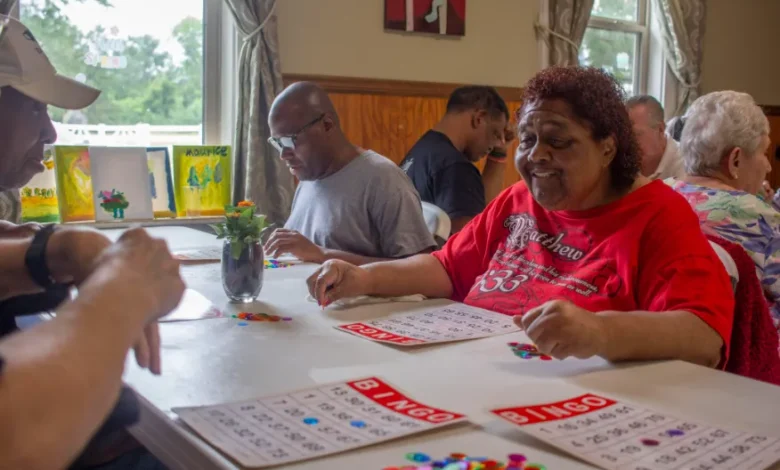
Finally, the most potent “medication” administered at these centers isn’t found in the pharmacy; it is socialization.
Chronic isolation is statistically as dangerous to a senior’s physical health as smoking 15 cigarettes a day. By bringing older adults out of their isolated living rooms and into a vibrant day center, these programs eradicate the loneliness epidemic that drives so much cognitive and physical decline.
Conclusion
The goal of aging in place has always been to keep older adults safely in their own homes. However, staying at home only works if the home does not become an isolated prison. By abandoning the fragmented medical maze and embracing all-inclusive, community-based hubs, we are proving that the most effective alternative to a nursing home is a highly coordinated, incredibly human safety net.